1
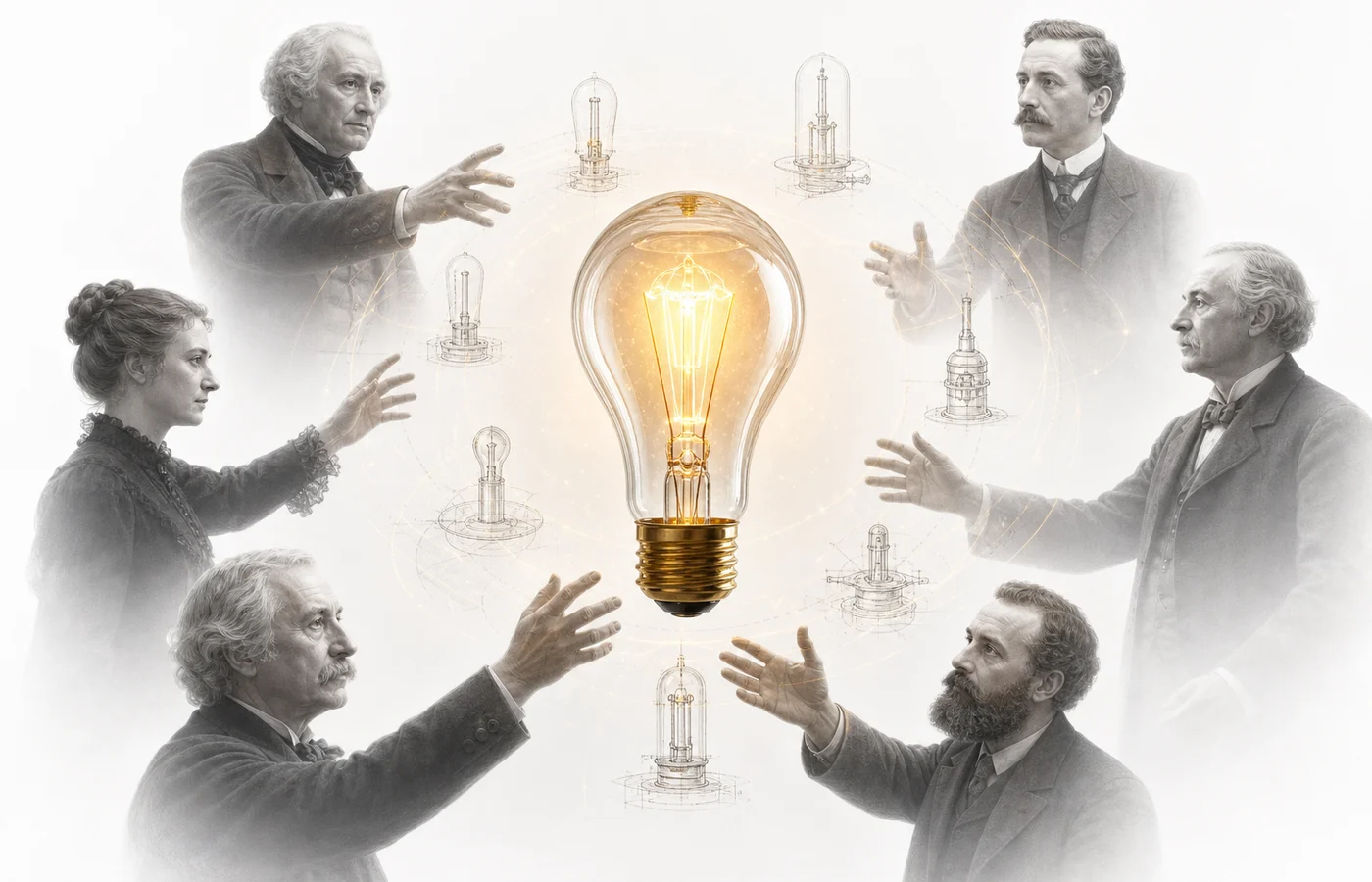
01. Multiple independent invention
When knowledge, demand, and materials align, several people often reach similar solutions.
History Myths
He did not. And the people who did were not who you think. Thomas Edison is so tied to the light bulb that it feels like one secure fact of popular history. But Edison did not invent the light bulb in the simple sense. He made a practical lighting system that could scale. The true story involves Joseph Swan, a legal fight, and a company called Ediswan.
Quick answer
No, not simply. Joseph Swan demonstrated a practical incandescent bulb before Edison's patent. Edison made electric lighting commercially viable by building the full system around it. Edison and Swan merged British operations into the Edison and Swan United Electric Light Company, nicknamed Ediswan.
The mystery
The true story involves Joseph Swan, a legal fight, and a company called Ediswan.
The short answer
No, not simply. Joseph Swan demonstrated a practical incandescent bulb before Edison's patent. Edison made electric lighting commercially viable by building the full system around it.
The twist
Edison and Swan merged British operations into the Edison and Swan United Electric Light Company, nicknamed Ediswan.
Common mistake
People argue Edison deserves sole credit because his bulb was practical.
History Myths
The phonograph, carbon microphone improvements, film technologies, batteries, and the industrial research lab model.
The forgotten inventor
A British chemist and physicist whose carbon-filament lamp predated Edison's patent.
Multiple invention in our time
Alexander Graham Bell and Elisha Gray reached similar telephone ideas at nearly the same moment.
But doesn't the best version count?
Swan's bulb was also practical. Edison's larger achievement was the system around the bulb.
Continue learning