COGNITIVE BIAS

What Is the Planning Fallacy? Why You Underestimate Everything

You think the project will take three weeks. It takes six. You think the commute will be 20 minutes. It is 45. The planning fallacy explains why you are always wrong about time.

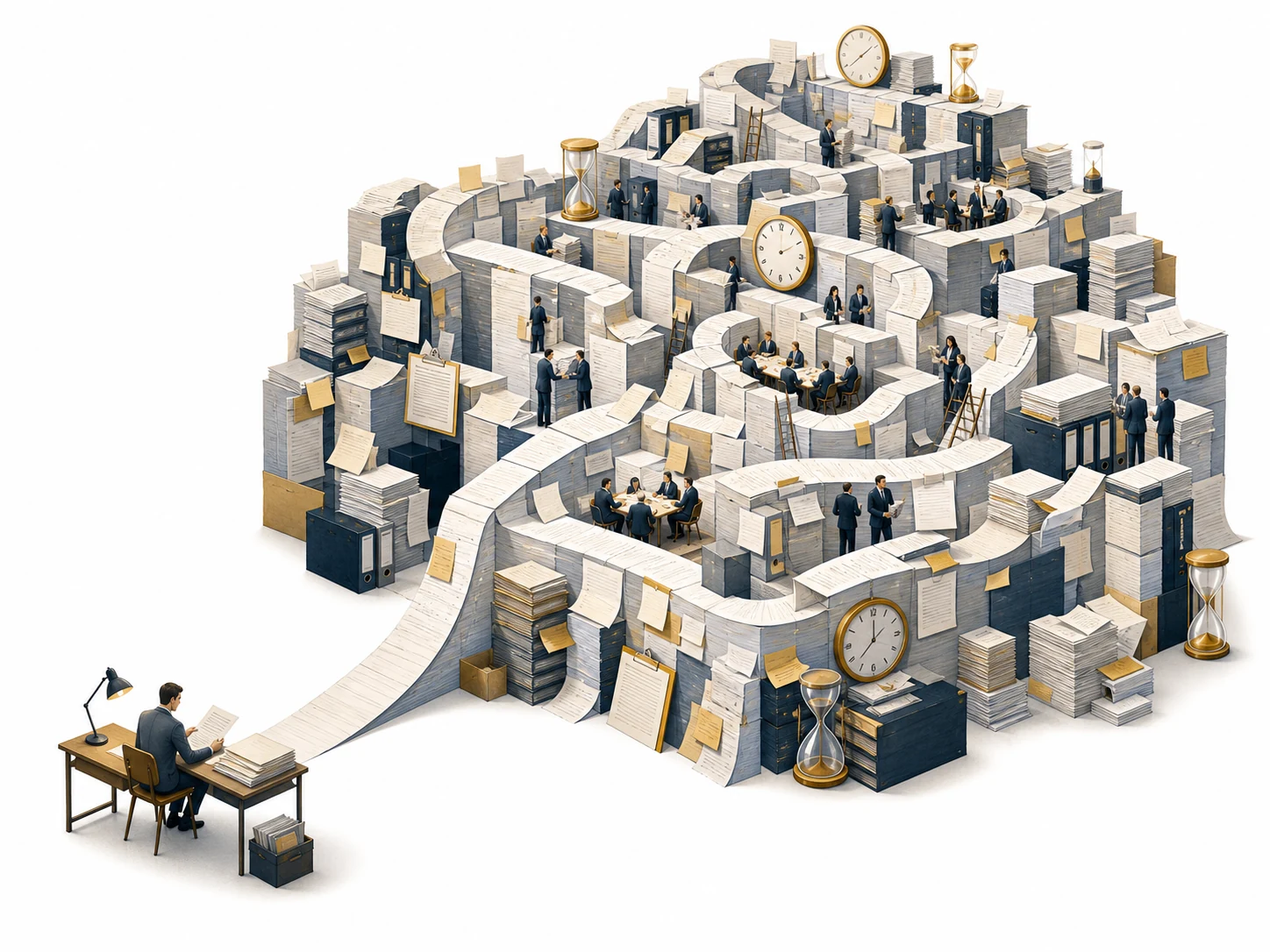
Editorial illustration of a person looking at a timeline that keeps expanding
Creator Daniel Kahneman, Amos TverskyOrigin Cognitive PsychologyYear 1970sCategory Cognitive Bias

QUICK ANSWER

Here is the idea in plain English.

The planning fallacy is the tendency to underestimate how long a task will take, how much it will cost, and what can go wrong. It was identified by Daniel Kahneman and Amos Tversky in the 1970s. The bias is caused by focusing on the best-case scenario, ignoring past experience, and failing to account for unexpected delays. It is why projects are always late and budgets are always exceeded.

If you remember only a few things, remember these.

The basic move

The planning fallacy is simple: you think things will take less time than they actually do. You think they will cost less. You think fewer things will go wrong. You are almost always wrong.

Why it matters

This happens because you focus on the best-case scenario. You imagine everything going perfectly. You forget that things rarely go perfectly. You forget past experiences where things took longer. You are overly optimistic.

Use it deliberately

Use past experience to make estimates. Ask: how long did this take last time? Multiply that by 1.5 or 2.

CORE IDEA

The concept in its simplest useful form.

What Does the Planning Fallacy Mean in Simple Terms?

The planning fallacy is simple: you think things will take less time than they actually do. You think they will cost less. You think fewer things will go wrong. You are almost always wrong.

This happens because you focus on the best-case scenario. You imagine everything going perfectly. You forget that things rarely go perfectly. You forget past experiences where things took longer. You are overly optimistic.

The planning fallacy is why projects are late, budgets are exceeded, and you are always running behind schedule. The solution is to use past experience to make better estimates.
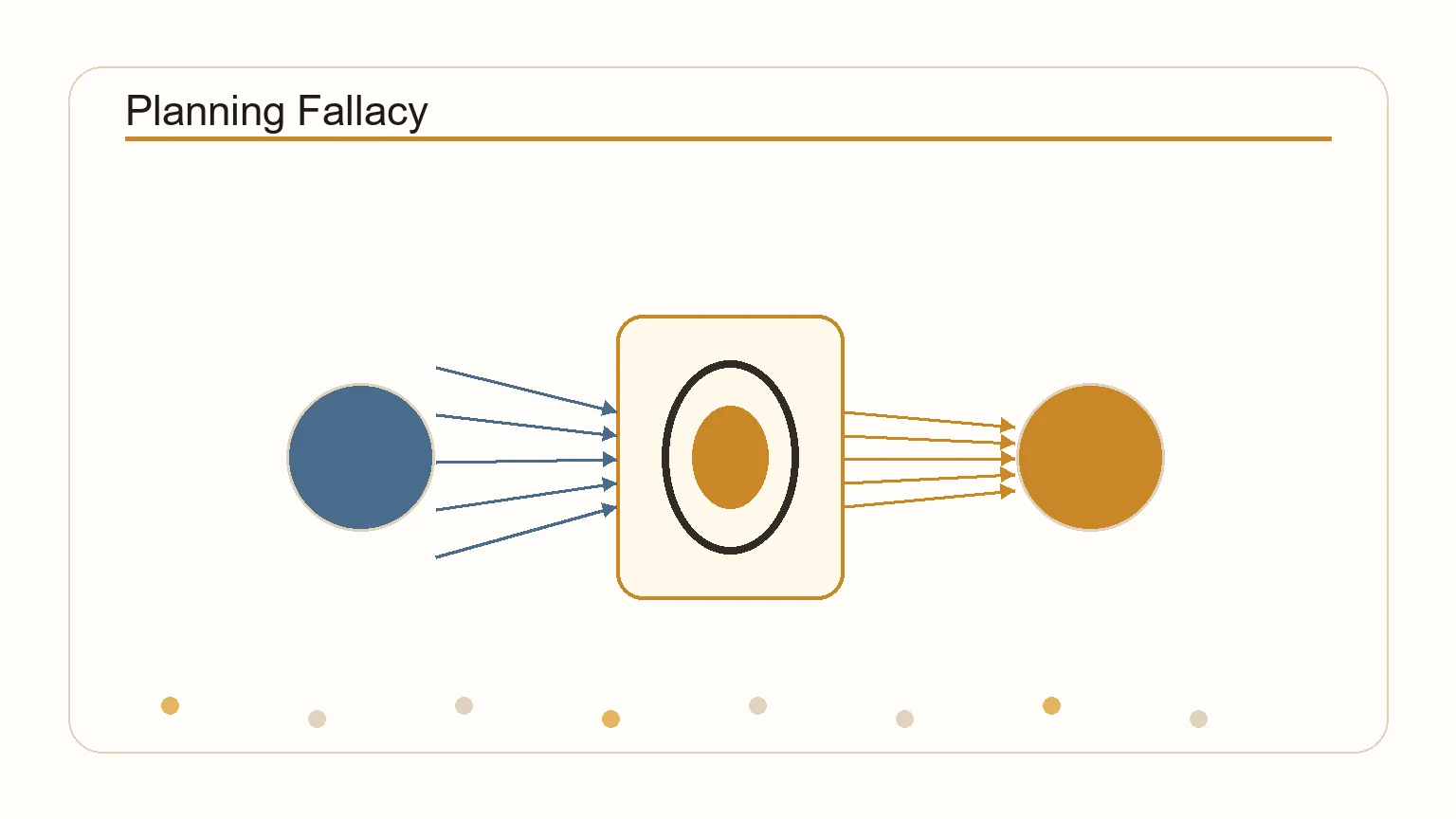
The small mechanism underneath the big idea.

01

The Story Behind the Planning Fallacy

In the 1970s, psychologists Daniel Kahneman and Amos Tversky were studying how people make predictions. They asked participants to estimate how long it would take to complete various tasks. The participants consistently underestimated. They were overly optimistic.

Kahneman and Tversky realized that people focus on the best-case scenario. They imagine everything going smoothly. They ignore past experience. They forget how often things go wrong. This is the planning fallacy.

The most famous example is the Sydney Opera House. The project was estimated to take four years and cost $7 million. It took 14 years and cost $102 million. The planning fallacy was the cause.

02

Why the Planning Fallacy Became Famous

The planning fallacy became famous because it is universal. Everyone underestimates how long things take. Everyone has experienced the frustration of a project running over. The concept gave people a name for the experience.

Kahneman and Tversky's research on the planning fallacy was part of their broader work on cognitive biases. They won the Nobel Prize in Economics for their discoveries. The planning fallacy is one of their most famous contributions.

Today, the planning fallacy is a foundational concept in project management, productivity, and decision making. It is taught in business schools and applied in practice.

Diagram comparing optimistic and realistic timelines for a project
A diagram showing an optimistic timeline and a realistic timeline. The optimistic timeline is always shorter. The realistic timeline is always longer.

Where this idea shows up outside the textbook.

History

The Sydney Opera House is the classic example. It was estimated to take four years and cost $7 million. It took 14 years and cost $102 million. The planning fallacy was the cause.

Business

Software projects are famous for the planning fallacy. Developers think a feature will take two weeks. It takes two months. The planning fallacy is the cause.

Everyday Life

You think a commute will take 20 minutes. It takes 35. You think a home renovation will take two weeks. It takes two months. The planning fallacy is everywhere.

Internet Culture

Content creators think a video will take two hours to edit. It takes six. The planning fallacy is why creators are always late.

CONCEPT MAP

Every idea has neighbors. This is where the current concept sits in the TinyThat knowledge graph.

Current concept

Planning Fallacy

People underestimate how long tasks will take.

What people often get wrong about this idea.

The planning fallacy means you are bad at estimating.

No. You are overly optimistic. You focus on the best-case scenario. You ignore past experience. The solution is to use past experience.

The planning fallacy only applies to big projects.

No. It applies to everything. Commutes, chores, errands, and hobbies. You underestimate everything.

You can eliminate the planning fallacy by being more careful.

You cannot eliminate it. You can only manage it. Use past experience to make better estimates.

Useful ideas become dangerous when they are stretched too far.

Criticisms and Limitations of the Planning Fallacy

The planning fallacy is a powerful model, but it has limitations. Sometimes things do go smoothly. Sometimes you are right. The fallacy is a tendency, not a rule.

The fallacy can be overstated. Some people are more optimistic than others. Some people learn from experience. The bias is not universal.

The planning fallacy is often misused as an excuse for poor planning. The solution is better planning, not blaming the bias.

Three simple ways to apply the idea without turning it into a slogan.

1

Use past experience to make estimates

Use past experience to make estimates. Ask: how long did this take last time? Multiply that by 1.5 or 2.

2

Assume things will go wrong

Assume things will go wrong. Add buffers. The buffer is not a failure. It is realism.

3

Break projects into smaller parts

Break projects into smaller parts. Estimate each part. Add them together. Then add a buffer.

EXPLORE NEXT

The best next ideas to read after this one.

Quick answers to common questions.

What is the planning fallacy in simple terms?

You think things will take less time than they actually do. You focus on the best-case scenario. You ignore past experience.

What is an example of the planning fallacy?

You think a project will take three weeks. It takes six. You think a commute will take 20 minutes. It takes 45. The planning fallacy is the cause.

How do you avoid the planning fallacy?

Use past experience to make estimates. Add buffers. Assume things will go wrong. Track your estimates and learn from your mistakes.

Why is the planning fallacy a problem?

It leads to missed deadlines, exceeded budgets, and wasted time. You are always behind schedule. You are always stressed.