Visual answer
How a Nerve Cell Fires
A neuron sends a signal by rapidly moving charged ions across its membrane.
Resting state
The cell holds different charges inside and outside its membrane. It is ready to fire.
Trigger
A signal opens ion channels, allowing sodium ions to rush into the cell.
Electrical wave
The charge change travels along the neuron as an action potential.
Reset
Potassium ions move out and the cell restores its original charge so it can fire again.
Tiny batteries
Every Cell Is a Tiny Battery
A cell does not look like a battery.
There is no metal casing, no positive end, no negative end, and no little label telling you how many volts it holds.
But electrically, every cell is doing something battery-like.
Its outer membrane keeps charged particles separated. Sodium, potassium, calcium, and chloride ions are moved in and out using tiny protein pumps and gates.
That separation creates a voltage across the membrane.
In neurons, the resting voltage is only around minus 70 millivolts. It sounds almost laughably small.
Then you remember that the brain contains billions of neurons, each using tiny voltage changes to build thoughts, sensations, movements, and memories.
Nerve signals
How a Thought Becomes an Electrical Signal
Neurons are specialists in controlled electrical drama.
Most of the time, a neuron sits quietly with its charge carefully maintained.
Then a strong enough signal arrives.
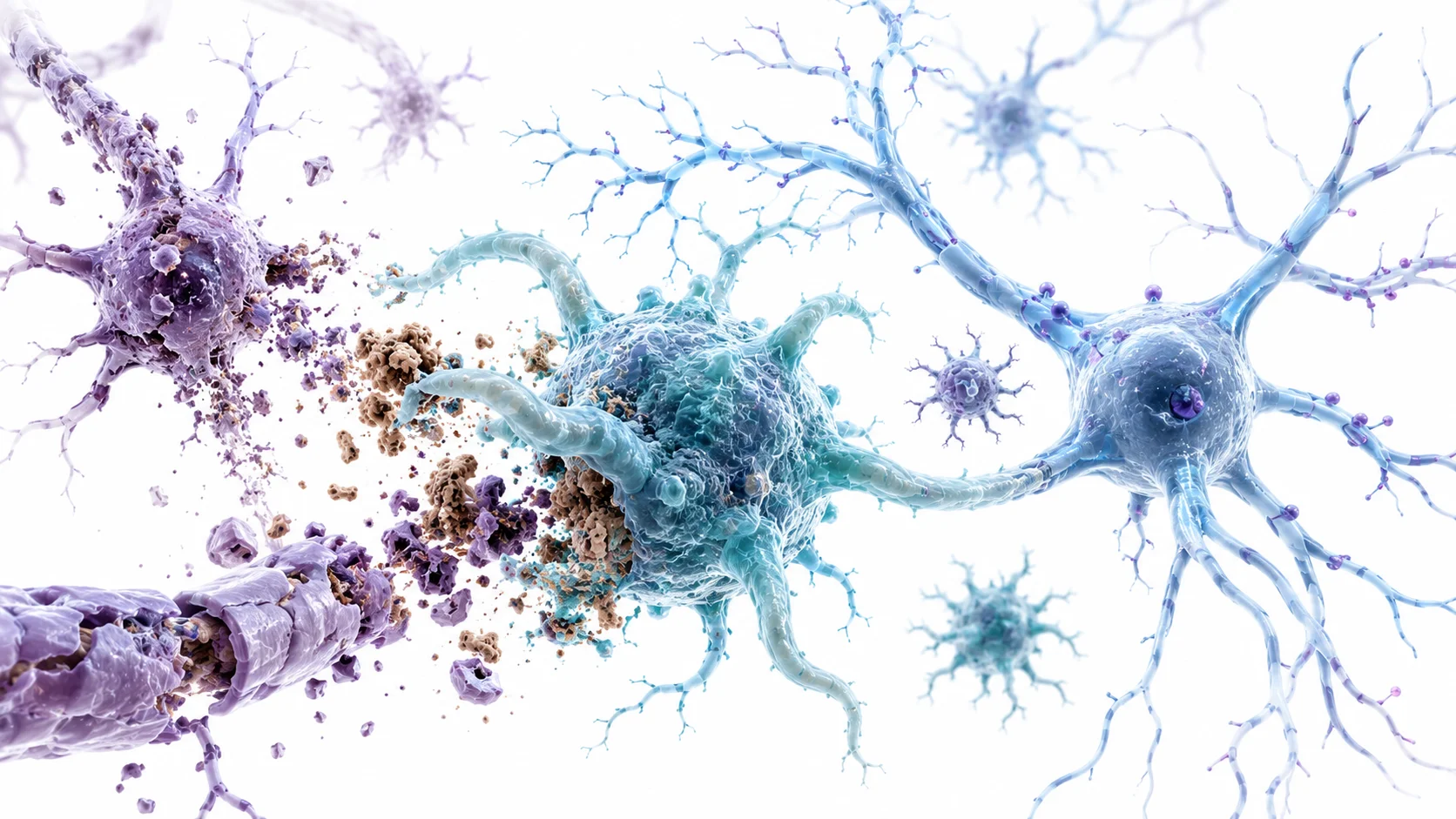
Ion channels open. Sodium rushes in. The inside of the cell briefly becomes more positive.
That change triggers the next patch of membrane, which triggers the next, and the signal races down the neuron like a falling line of dominoes.
The whole event can take only a few milliseconds.
Then the neuron resets and waits for the next signal.
This is happening throughout your nervous system while you read this sentence.
Ancient electricity
Electricity Is Older Than Brains
It is tempting to think the body evolved electricity for the brain.
The truth is stranger.
Electricity existed in living things long before brains appeared.
Single-celled organisms use electrical gradients to move nutrients, regulate water, control their internal chemistry, and respond to the world around them.
Neurons did not invent bioelectricity.
They took an ancient biological tool and pushed it to an extreme.
Your thoughts depend on a technology life was already using hundreds of millions of years before anything had a nervous system.
Heart spark
Your Heart Has Its Own Electrical Spark
The heart does not wait for your brain to remind it to beat.
It has its own electrical timing system.
A small cluster of specialized cells called the sinoatrial node sends out rhythmic electrical signals.
Those signals spread through the heart muscle in a carefully timed wave, causing the chambers to squeeze in the correct order.
This is what an ECG reads from the surface of your skin.
The machine is not listening to the sound of the heart. It is reading the electrical pattern behind the beat.
When that pattern goes wrong, the rhythm can become dangerous. In some emergencies, a defibrillator gives the heart a controlled shock to help reset the electrical chaos.
Electric brain
Your Brain Is a Living Electrical Storm
The brain is not a quiet organ.
It is a storm of electrical activity folded inside the skull.
Roughly 86 billion neurons communicate through changing patterns of electrical and chemical signals.
Some patterns are associated with sleep. Some with attention. Some with fear, memory, recognition, movement, or the moment you understand a sentence.
An EEG can detect some of these patterns using electrodes placed on the scalp.
That means a machine outside the body can read faint traces of the brain's electrical activity.
You are not simply a body that happens to produce electricity. You are an electrical organism using flesh as its architecture.
Movement
Every Movement Begins as an Electrical Command
Raise your hand. Blink. Swallow. Take a step.
Each movement begins with electrical signaling.
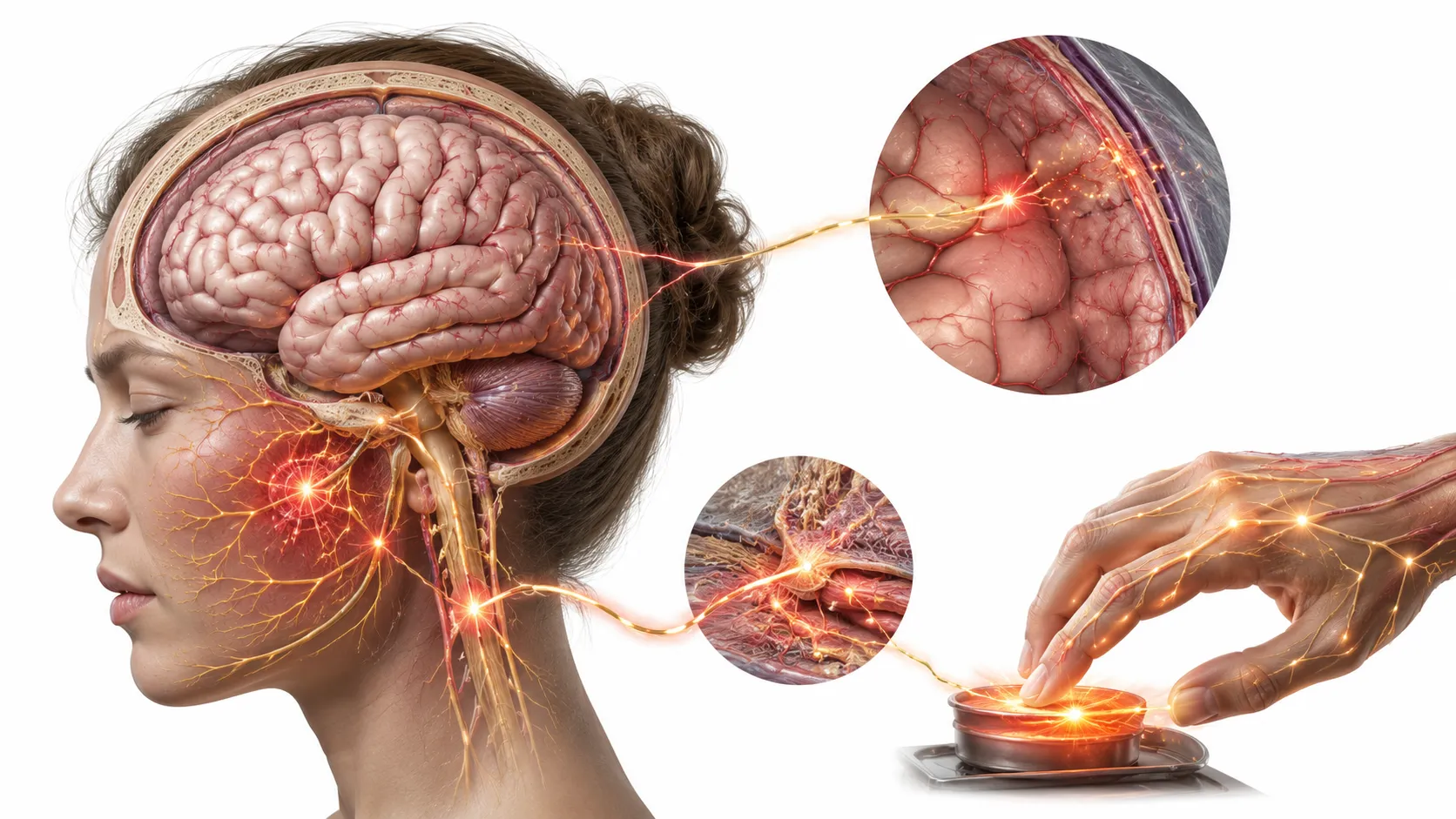
Your brain sends commands through motor neurons. Those signals travel down the spinal cord and out toward specific muscles.
At the meeting point between nerve and muscle, the electrical signal triggers a chemical release.
That chemical tells the muscle fiber to contract.
The process is so fast and so ordinary that you barely notice it.
Walking across a room requires countless electrical instructions, most of which happen below awareness.
Why not feel it?
Why Can't You Feel the Electricity?
People imagine electricity as a visible spark or a painful shock.
The electricity inside your body is different.
It operates at tiny voltages and moves through carefully controlled pathways inside living tissue.
You do not feel most of it for the same reason you do not feel individual blood cells moving through your veins.
The system is working constantly, but it has become part of the background machinery of life.
The fact that you cannot feel it does not make it any less real.
Only the brain?
Myth vs Reality
What people think
Electricity only exists in the brain
Because neurons produce dramatic electrical signals, many people assume the rest of the body is mostly chemical and only the brain is truly electrical.
What actually happens
Every living cell uses electricity
Neurons use electricity most dramatically, but every cell maintains electrical differences across its membrane. Heart cells, muscle cells, skin cells, and even single-celled organisms depend on tiny voltages to function.
Where it shows up
Where Body Electricity Shows Up
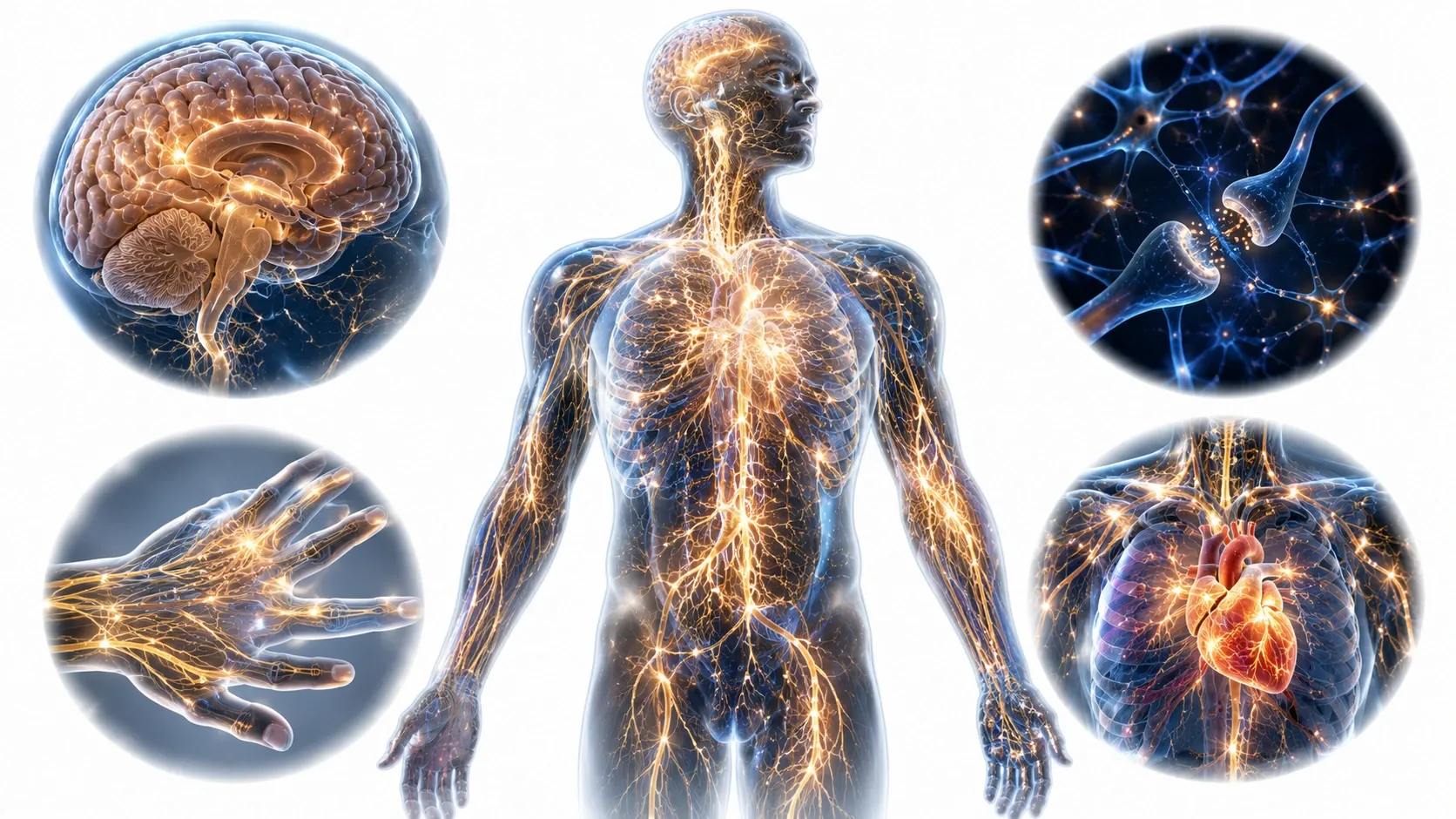
Brain
Electrical patterns help produce thought, memory, perception, attention, and consciousness. Measurable with EEG.
Heart
Rhythmic electrical pulses coordinate each heartbeat. Measurable with ECG.
Muscles
Motor neurons use electrical signals to trigger muscle contraction. Measurable with EMG.
Skin
Electrical properties of the skin change with sweat, stress, and arousal.
Eyes
Retinal cells convert light into electrical signals that travel through the optic nerve to the brain.
Quick answers
Common questions
How much electricity does the human body produce? +
The brain uses about 20 watts of power, but most body electricity is used internally for signaling. It is not produced as usable external power like a battery or generator.
Can the electricity in my body shock someone? +
No. The electrical signals inside the body usually operate at tiny voltages, mostly in millivolts. Static electricity from carpet or clothing is a different phenomenon.
Is the nervous system electrical or chemical? +
It is both. Electrical signals travel along neurons, and chemical messengers often carry signals between neurons or from nerves to muscles.
What happens if the body's electricity goes wrong? +
Disrupted electrical signaling can cause problems such as seizures, arrhythmias, muscle weakness, or loss of consciousness, depending on where the disruption occurs.
Is bioelectricity used in medicine? +
Yes. ECG, EEG, and EMG measure electrical activity in the heart, brain, and muscles. Pacemakers, defibrillators, and some brain stimulation treatments also work with the body's electrical systems.