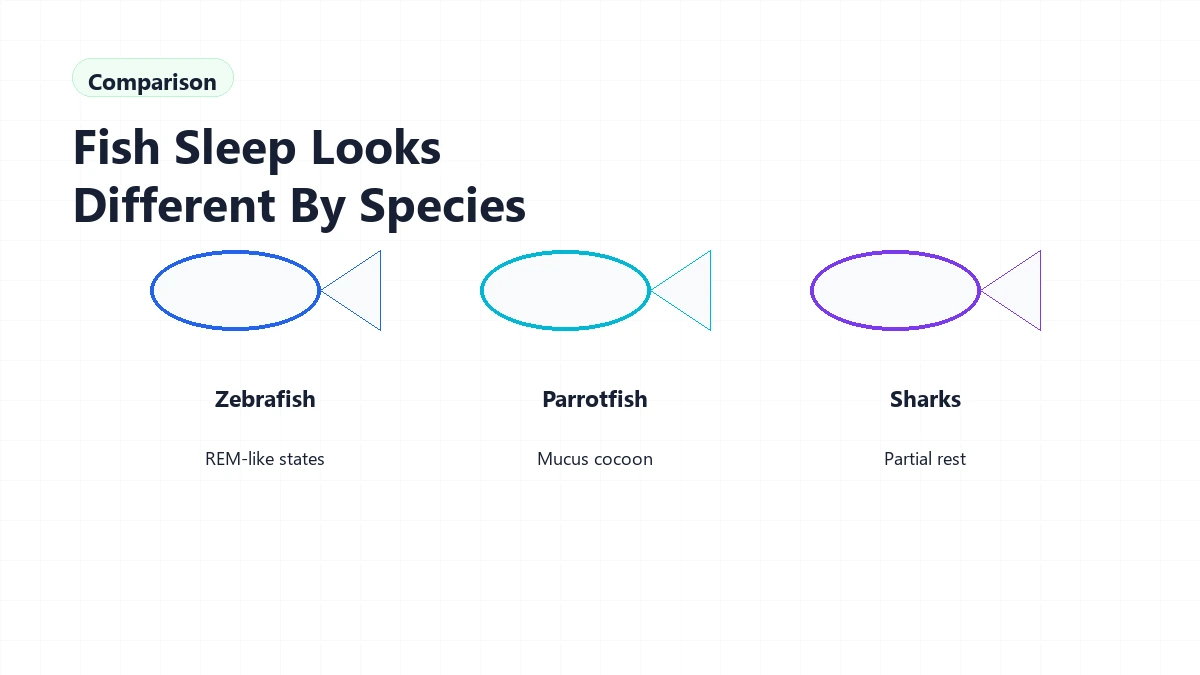
Zebrafish have been shown to exhibit sleep states with brain activity patterns that roughly parallel the sleep stages of mammals, including something resembling REM sleep.
Body & Brain
Why do fish sleep, and how do they do it?
Why Do Fish Sleep?
Fish have no eyelids. They cannot close their eyes. They are surrounded by predators. And yet, they sleep.
On this page
The short answer
Fish sleep to allow their nervous systems to perform the same cellular maintenance and memory consolidation that sleep provides in all animals. The need appears to be a universal feature of complex nervous systems.
Fish enter a state of reduced activity and lowered responsiveness that qualifies as sleep by neurological criteria. During this state, metabolism slows, the brain cycles through activity patterns distinct from waking, and the nervous system undergoes repair and consolidation processes. Some species hover motionless. Some lie on the bottom. Some, remarkably, secrete a mucus cocoon around themselves first. What they do not do is stay permanently awake.
At a glance
Fish sleep is visible as behavioral quieting.
Fish do not sleep because they never close their eyes.
The fact that fish sleep, and sleep in ways recognizably similar to mammalian rest, is one of neuroscience's most powerful clues that sleep is not a luxury that evolution stumbled onto late in history but something so fundamental that no complex nervous system has ever been able to abandon it.
Imagine sleeping while floating in a lit, open room, unable to lock the door, unable to close your eyes, while strangers wander through. Fish do this every single day.
Behind the science
The story behind it
Zebrafish and the Genetics of Sleep
Zebrafish became a key model organism for sleep research partly because they are transparent in larval form, allowing scientists to watch their brains in real time under a microscope. Researchers used them to identify neurons and genetic pathways that control sleep states.
Mutations in genes affecting zebrafish sleep produced fish that slept too little or too much in ways that mirrored human sleep disorders.
Some of the most practical insights into human sleep medicine may have come from watching a transparent inch-long fish drift off under a microscope.
Leung et al., REM-like sleep in zebrafish, 2019
Researchers identified a sleep state in zebrafish characterized by rapid eye movements, muscle twitching and a brain activity signature similar to mammalian REM sleep.
The study pushed the evolutionary origin of REM-like states back to at least 450 million years ago.
Diagram
Why Do Fish Sleep: the idea in one diagram
Fish sleep is defined by reduced activity, lowered responsiveness, sleep rebound after deprivation and distinct nervous-system states, not by closed eyes.
- 1Activity drops
Fish sleep is visible as behavioral quieting.
- 2Responsiveness decreases
Sleep makes fish less responsive but not helpless.
- 3The nervous system catches up
Fish sleep because complex nervous systems need maintenance.
How it works
The mechanism
Fish sleep is defined by reduced activity, lowered responsiveness, sleep rebound after deprivation and distinct nervous-system states, not by closed eyes.
- Step 01
Activity drops
Sleeping fish hover, settle near shelter, lie on the bottom or keep slow automatic swimming depending on the species.
The body switches from patrol mode to low-power mode.
Fish sleep is visible as behavioral quieting.
- Step 02
Responsiveness decreases
A resting fish is harder to startle and less reactive to small changes in its environment.
The alarm threshold is raised, not switched off completely.
Sleep makes fish less responsive but not helpless.
- Step 03
The nervous system catches up
Sleep supports repair, memory consolidation and restored neural chemistry, and deprivation produces rebound sleep.
Maintenance work happens while the network is less busy.
Fish sleep because complex nervous systems need maintenance.
Surprises
Facts worth sitting with
Zebrafish have been shown to exhibit sleep states with brain activity patterns that roughly parallel the sleep stages of mammals, including something resembling REM sleep.
Surprising facts
What seems backwards
Worth comparing
In everyday life
Easy to get wrong
Pressure points
Where the simple answer gets interesting
Do fish dream?
Zebrafish show something that may be functionally equivalent to REM sleep, the stage in mammals most associated with dreaming, characterized by rapid eye movements and complex brain activity patterns. Whether there is subjective experience involved in fish rest states is unknown, but the neurological machinery that produces dream states in mammals appears to have ancient precursors.
If zebrafish have REM-like sleep, dreaming may be 450 million years old.
Why hasn't evolution eliminated the need for sleep in fish?
Because sleep is not merely rest. It is when the nervous system performs repairs that cannot be done while the system is active: clearing metabolic waste, consolidating memories, pruning synapses, restoring neurotransmitter levels. An animal that never slept would accumulate neural damage faster than it could repair it.
Every attempt by evolution to reduce sleep seems to run into the same problem: the things sleep does cannot be replicated in any other state.
Do sharks really sleep while swimming?
Some shark species use a form of spinal locomotion that allows the body to continue swimming on muscle memory while the brain rests. Others rest motionless on the seafloor. Obligate ram ventilators have developed neural adaptations that allow partial brain rest without stopping.
The shark's solution to never being able to stop is to partially turn the brain off while keeping the body on autopilot.
Clarify
Myth and reality
Myth
Fish do not sleep because they never close their eyes.
Reality
Closing the eyes is not a prerequisite for sleep. Fish meet neurological and behavioral criteria for sleep.
Evidence
Zebrafish deprived of sleep show physiological stress and stronger subsequent sleep, exactly as sleep-deprived mammals do.
Myth
Fish are too simple to need sleep.
Reality
Every animal with a sufficiently complex nervous system studied to date sleeps.
Evidence
Even fruit flies and C. elegans worms have measurable sleep states.
Looking closer
The deeper pattern
The universality of sleep across all complex animal life reveals that no nervous system has ever found a way to function indefinitely without rest.
One way to think about it
The pressure against sleep in fish is enormous. They are exposed, cold-blooded, and in constant predator danger. Yet sleep persists in every species studied. Whatever sleep does must be more essential than the survival risk it creates.
When a behavior persists universally across 450 million years of evolution under conditions where it seems deeply unwise, it is not optional.
Limits
Where the explanation bends
Migratory fish during long breeding runs.
Some migratory fish species appear to dramatically reduce sleep during migrations, in a manner analogous to migratory birds.
It suggests that under extreme pressure, the brain may temporarily modify sleep requirements, though the limits remain unknown.
In daily life
What this helps you notice
Aquarium lighting cycles matter for fish health because disrupting fish sleep by keeping tanks bright at night impairs their immune function and longevity.
Studies on farmed fish found that light pollution around aquaculture facilities disrupted sleep patterns, reduced growth rates and increased susceptibility to disease.
Remember
Key takeaways
- 1
Fish sleep, and sleep deprivation affects them the same way it affects mammals.
- 2
Zebrafish have REM-like sleep, pushing the evolutionary origin of dreaming back 450 million years.
- 3
Parrotfish sleep inside mucus cocoons they produce themselves.
- 4
Sharks can rest half their brain at a time while continuing to swim.
- 5
The universality of sleep across all complex animals suggests it performs functions nothing else can replace.
If 450 million years of predation, competition, and survival pressure could not eliminate sleep from a fish, the idea that modern productivity culture can eliminate it from a human seems optimistic at best.
Sleep was not invented by mammals. It was not a feature added late to the nervous system for comfort. It was there from the beginning, insisting on itself through 450 million years of evolution, in animals that had every reason to stay awake.
Read around the idea
More questions with the same curious pull
Nearby doors from the TinyThat archive, chosen by topic, intent, and reader curiosity.

Body & Brain
Does Everyone Dream?
Almost certainly yes, though not everyone remembers their dreams.
Body & Brain
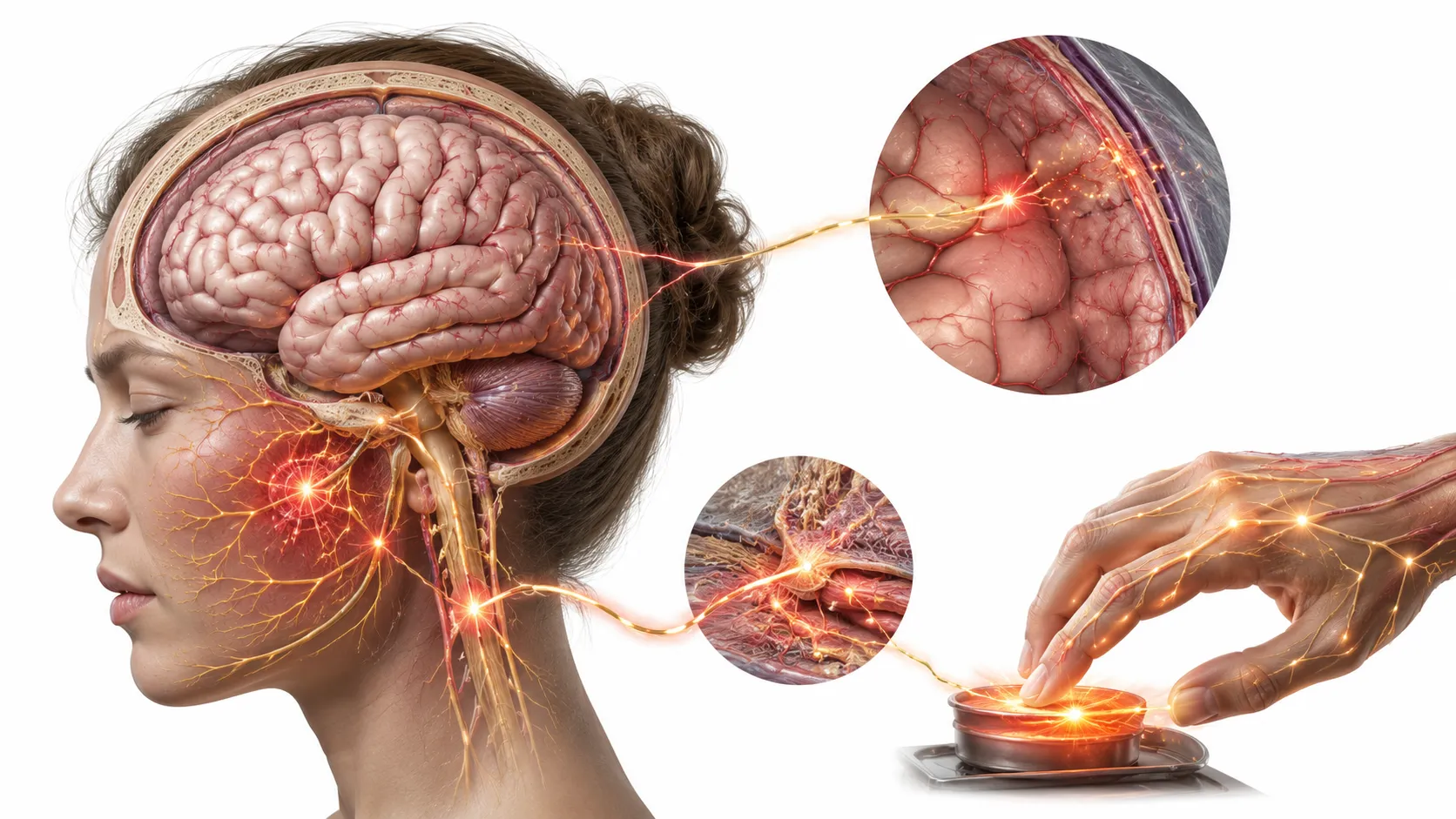
Can the Brain Feel Pain?
The brain controls all pain in your body, yet it cannot feel pain itself. Discover why, and what this strange fact re...
Body & Brain
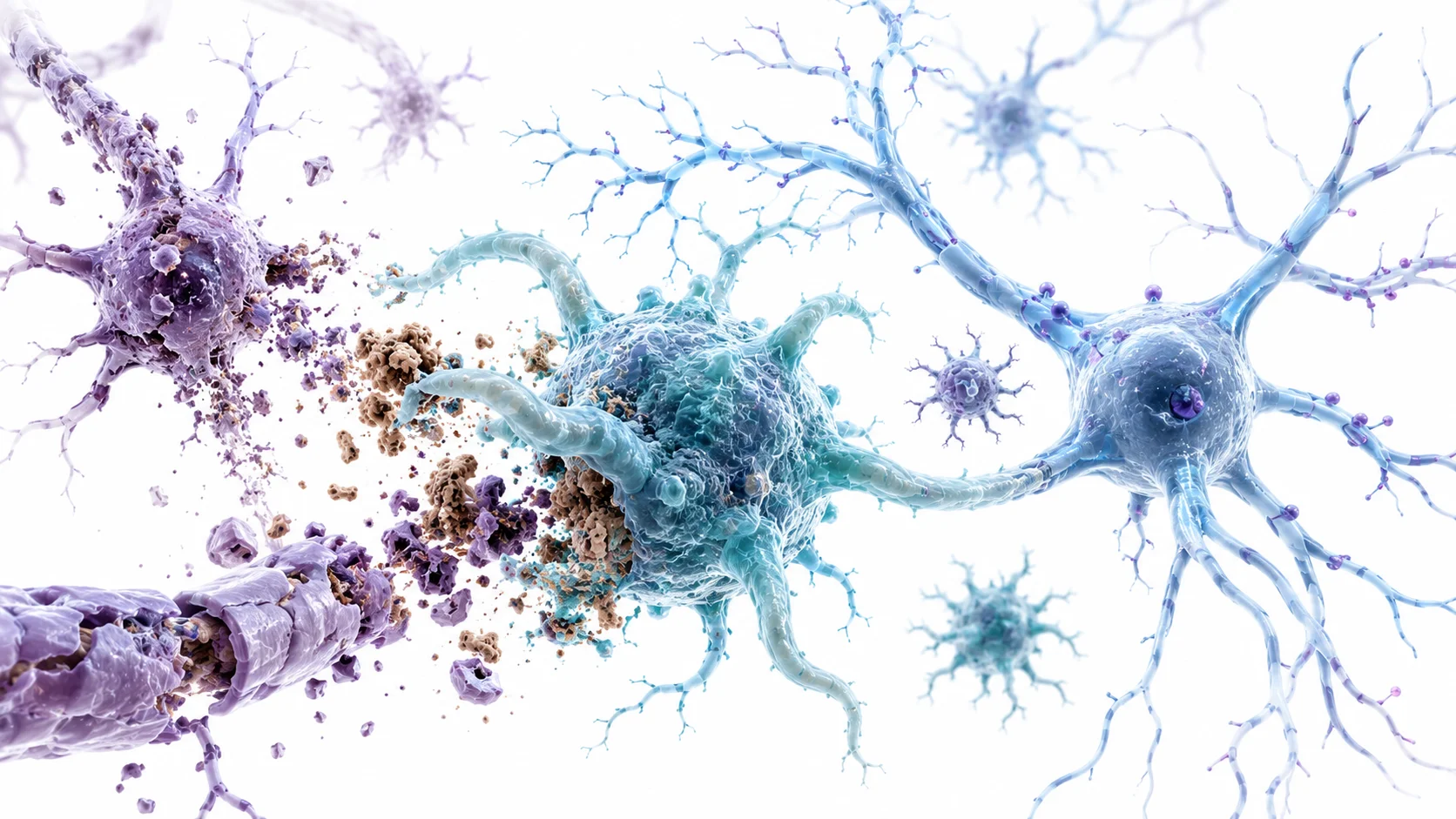
Does Your Brain Eat Itself?
Your brain really does consume parts of itself. Learn about autophagy, synaptic pruning, and why self-consumption is...