Visual answer
How Finger Wrinkling Actually Works
The process goes from skin contact with water, to a nerve signal, to blood vessel changes, to the wrinkle.
Water enters sweat pores
After a few minutes of immersion, water penetrates sweat ducts in the fingertip skin. This is detected by the nervous system.
Sympathetic nerve signal fires
Your autonomic nervous system sends a signal to the blood vessels in the fingertip, the same system that controls heart rate and sweating.
Blood vessels constrict
The small vessels narrow (vasoconstriction), reducing the volume of fluid inside the fingertip. The fingertip shrinks slightly in volume.
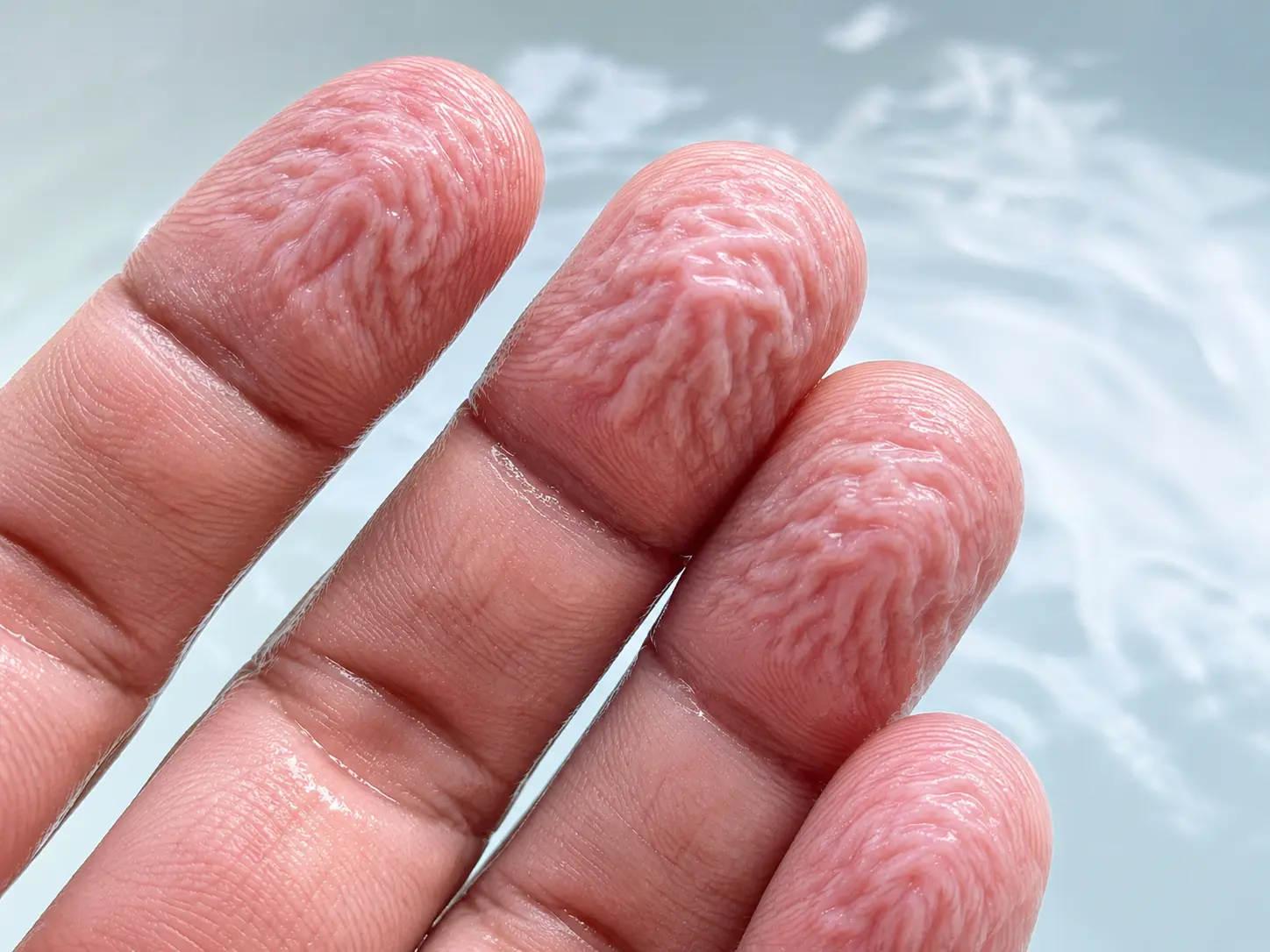
Skin folds into wrinkles
With less volume underneath it, the outer skin has too much surface area for the space. It creases inward into the characteristic ridge pattern.
Real reason
It's Your Nervous System, Not Passive Soaking
For a long time, the explanation was simple: the outer layer of dead skin cells absorbs water and swells up, and because it can't expand outward it wrinkles. That explanation is wrong. Or at least incomplete.
The clearest evidence against the passive-soaking theory: people with damage to the sympathetic nerve in their hand, from injury or surgery, don't get wrinkled fingers when immersed in water. Their skin is perfectly intact, the water exposure is identical, but no wrinkles form. The wrinkling requires nerve signals.
What actually happens is that water entering the sweat pores in your fingertips triggers a signal through the sympathetic nervous system. This causes the blood vessels in the fingertip to constrict. Less blood volume means less internal pressure means less volume. The skin above those vessels, now with more surface area than volume beneath it, folds into ridges.
Myth vs reality
Myth vs Reality
What people think
Wrinkly fingers mean you're dehydrated
This is a popular belief, but water-induced finger wrinkling has nothing to do with your overall hydration level. It's a local nervous system response to external water immersion. Whole-body dehydration has its own signs, urine color, thirst, dry mouth, not finger wrinkles.
What actually happens
Your fingers wrinkle because your nervous system is working properly
Getting pruney fingers is actually a sign that your autonomic nervous system and blood vessels in your hands are functioning normally. People with autonomic nerve damage often lose this response.
Common triggers
Wrinkling: What Changes the Response
Normal water immersion (3–5 min)
Sympathetic nerve response kicks in, vasoconstriction begins, wrinkles appear gradually
Nerve damage to the hand
No wrinkling even with prolonged immersion, the nerve signal required isn't present
Autonomic nervous system conditions
Conditions like diabetic neuropathy can reduce or alter the wrinkling response
Quick answers
Common questions
Why does wrinkling only happen on fingers and toes? +
The skin on your palms and soles, glabrous skin, has a high density of sweat glands and a specific type of blood vessel arrangement not found elsewhere on the body. This is what makes the nervous-system-driven wrinkling response possible in those areas.
How long does it take for fingers to wrinkle? +
Typically around 3 to 5 minutes of immersion. The timing can vary with water temperature, warmer water around body temperature seems to trigger it more readily than very cold water.
Do fingers wrinkle in all liquids? +
The response seems to be specific to water entering the sweat ducts. Other liquids that don't penetrate the skin the same way may not trigger the same nervous system response.
Why don't wrinkles stay permanently after a bath? +
Once the hand dries out and is no longer submerged, the nervous system signal reverses. Blood vessels dilate back to normal size, volume returns to the fingertip, and the skin flattens out.
Can wrinkly fingers signal a health issue? +
Not developing wrinkles in water when you'd normally expect to can be an indicator of sympathetic nerve damage. Doctors have used the water immersion test as a bedside test for sympathetic nerve function. If you've always been submerged and fingers never wrinkle, it's worth mentioning to a doctor.
Do babies get pruney fingers? +
Yes, the response is present in babies and infants. It's not something that develops with age; it's built in from early on as part of the autonomic nervous system.